The workflow problem
Physical records move between storage locations and authorised holders. Digital copies, requests and return handling add context that needs to stay connected to the record.
Custodia Registry web application case study
Records and custody workflows brought together in a browser-based application.
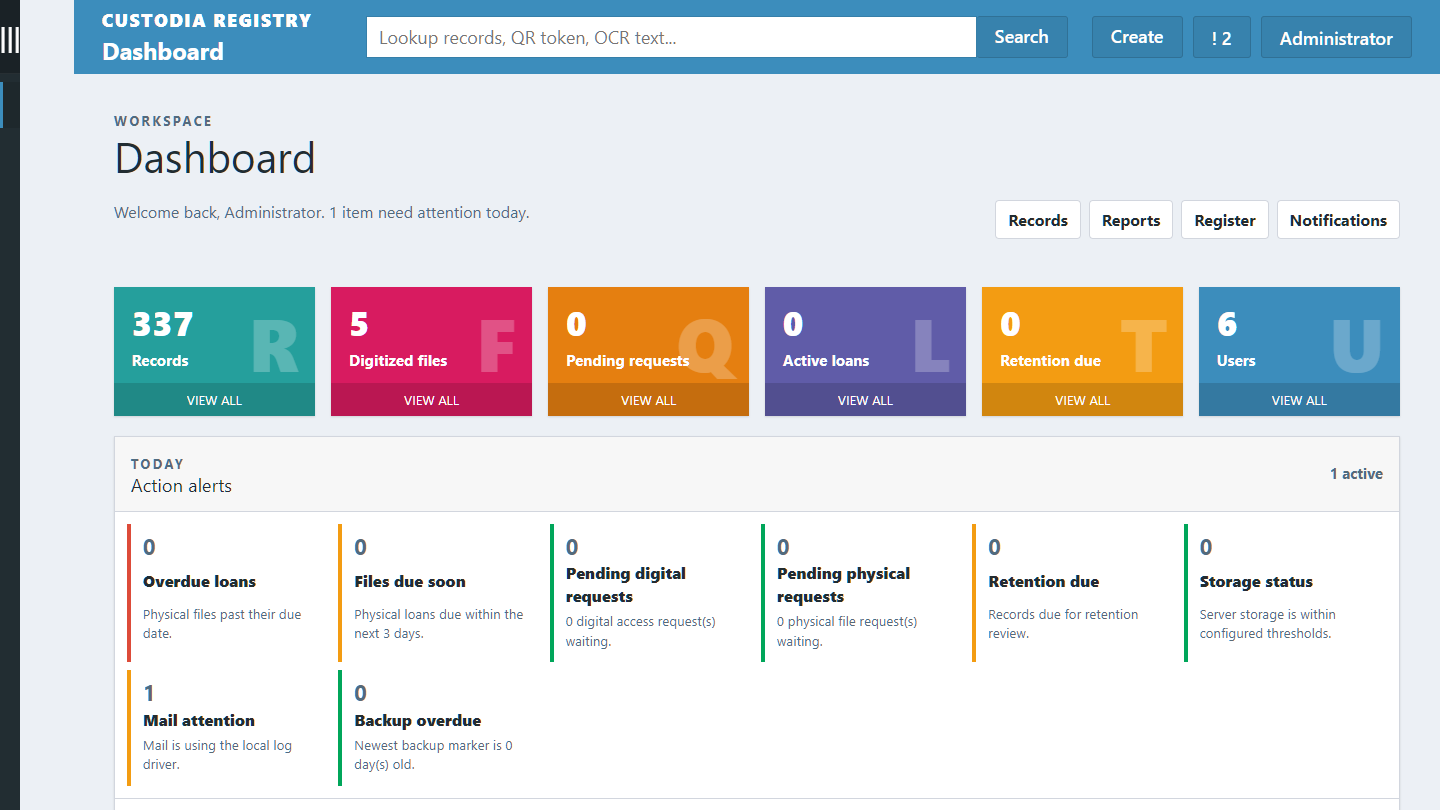
LearnTech application example
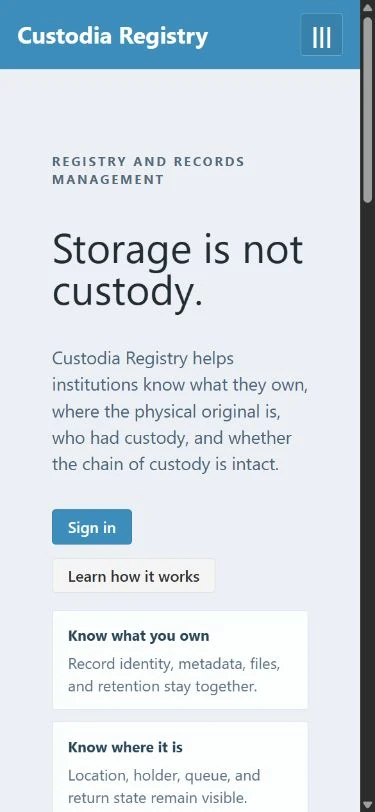
A register alone does not explain where a physical file is, who holds it or what should happen next. Custodia Registry connects record information with storage, custody, digitised files and operational review.
Physical records move between storage locations and authorised holders. Digital copies, requests and return handling add context that needs to stay connected to the record.
Structured registration, search, storage locations, requests, checkout and return handling are joined with roles, permissions, audit history and reporting entry points.
This is a LearnTech product example demonstrating business web application work. It is not presented as a commissioned client case study or as evidence of measured customer results.
Registration and search establish a structured record. Requests and custody workflows cover checkout, pickup, recall, return receipt and final reshelving. Digital-file metadata, previews and versions sit alongside that record, while permissions and controlled access determine what authorised users can do.
Audit history and reporting give authorised reviewers context about activity, physical loans, retention, categories and departments. QR record and location labels support handling and consistent storage. Requirements such as retention, access and deployment must be assessed for the organisation using the system.
Custom web application development can bring related tasks into one workflow: structured information, permission-based actions, review screens and exports. Discovery establishes whether an existing product, configuration or a new application is the practical answer.
Product availability, deployment fit, data migration, hosting, security requirements, training and ongoing support are discussed separately. No quantified time saving, compliance certification or performance result is claimed by this example.